
Lateral Extra-Articular Tenodesis in St. Louis, MO
Lateral extra-articular tenodesis (LET) is a surgical procedure that may be performed alongside or in isolation ACL reconstruction to help improve rotational stability of the knee. By reinforcing the structures on the outside of the knee, LET can provide additional control against rotational forces that may contribute to instability or place stress on a reconstructed ACL. Dr. Matthew J. Steffes provides sports medicine and orthopedic care in the St. Louis area, including treatment of knee ligament injuries and ACL injuries in athletes and active patients.
What Is Lateral Extra-Articular Tenodesis?
Lateral extra-articular tenodesis is a procedure that uses a strip of tissue from the outer portion of the thigh, typically part of the iliotibial band, to reinforce the lateral side of the knee. The tissue is routed and secured near the outer part of the knee to help control excessive internal rotation.
LET is generally performed in combination with ACL reconstruction rather than as an isolated procedure. The ACL helps stabilize the knee from front-to-back movement and rotational forces. When additional rotational instability is present, reinforcing the lateral structures may provide another layer of stability.
The procedure is different from an ACL reconstruction because it does not replace the ACL. Instead, it works as an additional stabilizing procedure that can complement an ACL graft.
What Are the Benefits of Lateral Extra-Articular Tenodesis?
When appropriately selected, adding LET to ACL reconstruction may provide several potential benefits:
- Additional rotational stability: LET can help control excessive internal rotation of the knee.
- Support for ACL reconstruction: The additional stabilization may reduce stress placed on the reconstructed ACL.
- Potentially lower risk of recurrent instability: In selected patients, LET may help reduce the likelihood of certain types of postoperative instability.
- Support for high-demand activities: Additional stability can be particularly relevant for patients participating in sports that involve cutting, pivoting, and rapid changes of direction.
- Complementary treatment: LET can be performed with ACL reconstruction when the surgeon determines that additional lateral stabilization is appropriate.
When Is Lateral Extra-Articular Tenodesis Recommended?
LET is not necessary for every patient undergoing ACL reconstruction. A surgeon may consider it when specific factors increase the concern for rotational instability or reinjury, including:
- Significant rotational instability of the knee
- Certain high-grade ACL injuries
- Revision ACL reconstruction
- Participation in pivoting or cutting sports
- Young or highly active patients with a higher risk of reinjury
- Generalized ligamentous laxity in selected cases
- A high-grade pivot-shift examination
- Situations in which additional protection of the ACL reconstruction is considered appropriate
The decision depends on the patient's injury, activity level, examination findings, surgical history, and overall treatment goals.
What Does Preparation for Lateral Extra-Articular Tenodesis Involve?
Preparation begins with a comprehensive evaluation of the knee. Dr. Steffes may review the patient's symptoms, injury history, athletic activities, previous surgeries, and goals for returning to activity. A physical examination helps assess knee stability and range of motion.
Imaging, including MRI and X-rays when appropriate, may be used to evaluate the ACL and identify associated injuries involving the meniscus, cartilage, or other structures.
Before surgery, patients may receive instructions regarding medications, eating and drinking, exercise, and arrangements for transportation and postoperative care. A rehabilitation plan is also an important part of preparation because physical therapy begins soon after surgery.
How Is Lateral Extra-Articular Tenodesis Performed?
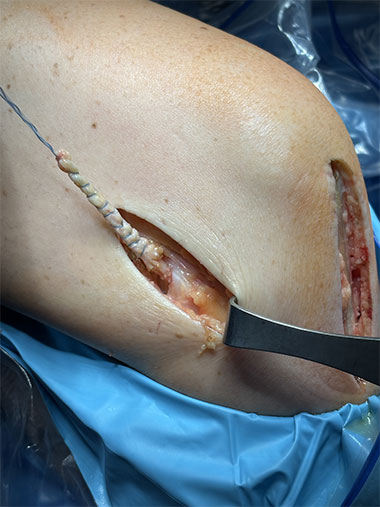
LET is generally performed at the same time as ACL reconstruction. After the ACL reconstruction is completed, the surgeon prepares a strip of tissue from the iliotibial band on the outside of the thigh.
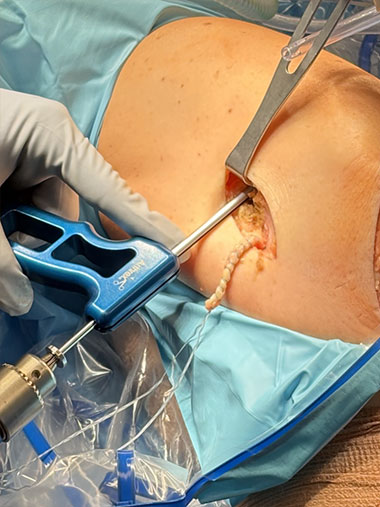
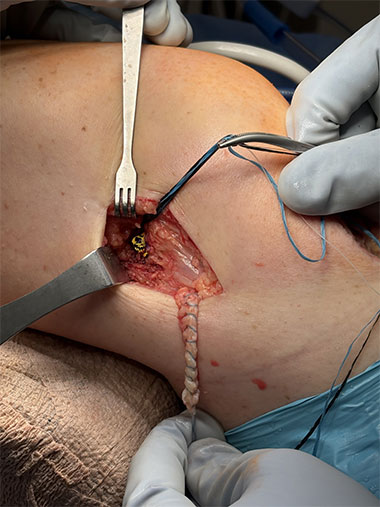
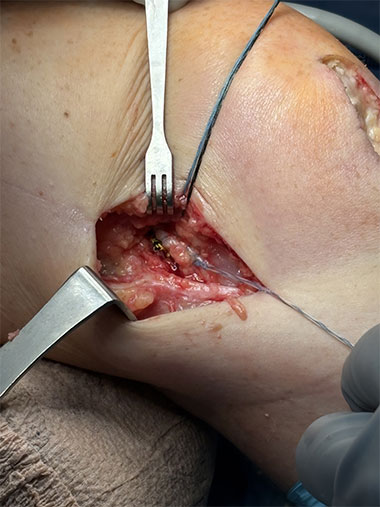
The tissue strip is carefully routed around the outer structures of the knee and secured at an appropriate location near the upper portion of the shinbone. This creates an additional restraint against excessive internal rotation.
The technique is designed to complement the reconstructed ACL while preserving normal knee motion. The exact surgical approach and fixation method can vary according to the patient's anatomy, injury pattern, and the surgeon's technique.
How is an LET performed
What to Expect During Recovery After Lateral Extra-Articular Tenodesis?
Recovery from LET is generally tied to recovery from the accompanying ACL reconstruction. Patients typically use crutches initially and follow a structured physical therapy program designed to restore knee motion, strength, balance, and stability.
Early rehabilitation focuses on controlling swelling, restoring range of motion, activating the quadriceps, and gradually improving the ability to bear weight. Later stages emphasize strengthening, coordination, dynamic stability, and sport-specific movement.
Returning to running, cutting, jumping, and competitive sports takes considerably longer than returning to everyday activities. The timing varies based on healing, strength, stability, rehabilitation progress, and the demands of the patient's sport. Return to sports should occur only after appropriate clinical and functional testing.
What Are the Risks and Complications of Lateral Extra-Articular Tenodesis?
As with any surgical procedure, LET has potential risks and complications. These may include:
- Infection
- Bleeding or blood clots
- Persistent pain or swelling
- Knee stiffness or reduced range of motion
- Nerve or blood-vessel injury
- Over-constraint of normal knee rotation
- Continued instability
- Problems involving the ACL graft or fixation
- Need for additional surgery
- Risks associated with anesthesia
Individual risks vary depending on overall health, the nature of the knee injury, and whether LET is performed with other procedures.
Why Choose Dr. Steffes for Lateral Extra-Articular Tenodesis in St. Louis?
Dr. Matthew J. Steffes is a fellowship-trained orthopedic surgeon specializing in sports medicine and arthroscopic surgery. His practice includes treatment of knee injuries, ACL reconstruction and repair, meniscal conditions, ligament injuries, and other sports-related problems.
His fellowship training at Kerlan-Jobe Orthopedic Clinic focused on orthopedic sports and arthroscopic surgery. His experience caring for athletes at the professional, collegiate, and high school levels informs an approach focused on helping active patients return to their desired activities.
For patients considering ACL reconstruction with additional stabilization, Dr. Steffes can evaluate the individual injury and determine whether LET is appropriate as part of the surgical plan.
Lateral Extra-Articular Tenodesis FAQs
Is LET performed instead of ACL reconstruction?
Usually, no. LET is generally performed as an additional procedure alongside ACL reconstruction when additional rotational stability is appropriate.
How long does recovery take after LET?
Recovery depends largely on the associated ACL reconstruction and any other procedures performed. Returning to sports generally requires several months of rehabilitation and meeting specific strength and functional criteria.
Can LET help prevent another ACL injury?
LET may reduce certain forms of recurrent instability in appropriately selected patients. It does not eliminate the possibility of another ACL injury.
Will I need physical therapy after LET?
Yes. Physical therapy is an important part of recovery and focuses on restoring motion, strength, balance, stability, and functional movement.
Can I return to sports after LET?
Many patients can return to sports after appropriate rehabilitation. The timing depends on healing and meeting the functional requirements for the patient's activity or sport.
Lateral Extra-Articular Tenodesis in St. Louis, MO
If you have an ACL injury or persistent knee instability, Dr. Matthew J. Steffes can evaluate your condition and discuss appropriate treatment options. Schedule an orthopedic sports medicine consultation in St. Louis, MO, to learn whether ACL reconstruction with lateral extra-articular tenodesis may be appropriate for your knee.


